Retailers and Brands Performance

The 2023 rankings provide an overview of over 82 retailers and brands’ certified cotton use. 
Retailers & brands performance rank by

Total Certified Cotton

%
No breakdown published

Sub-brands
Reebok, TaylorMade, Rockport Reebok, TaylorMade, Rockport
Notable Remarks
Lorem ipsum dolor sit amet consectetur. Lectus lorem pharetra velit sem faucibus enim sem phasellus. Blandit amet facilisi tristique pretium.
Meta Data
hide popup HIDE FILTER
Score
Company Name
Breakdown
  • Breakdown Availability
    • Yes
    • No
    • Estimated
  • Select Cotton Category
    • Better Cotton or equivalent
    • Organic
    • Recycled
    • Other
hide popup HIDE LEGENDS
  • score
  • 99%
  • 90%
  • 80%
  • 80%
  • 0%
  • breakdown
  • Better Cotton or equivalent
  • Organic
  • Recycled
  • Other
How to Read The Rankings
Legend
  • score
  • 99%
  • 90%
  • 80%
  • 80%
  • 0%
  • breakdown
  • Better Cotton or equivalent
  • Organic
  • Recycled
  • Other
How to Read The Rankings

Total Cotton Used

Sub-brands
Reebok, TaylorMade, Rockport Reebok, TaylorMade, Rockport
Notable Remarks
Lorem ipsum dolor sit amet consectetur. Lectus lorem pharetra velit sem faucibus enim sem phasellus. Blandit amet facilisi tristique pretium.
Meta Data
hide popup HIDE FILTER
Ranking
Company Name

Total Cotton vs Total Synthetics

No breakdown published
Sub-brands
Reebok, TaylorMade, Rockport Reebok, TaylorMade, Rockport
Notable Remarks
Lorem ipsum dolor sit amet consectetur. Lectus lorem pharetra velit sem faucibus enim sem phasellus. Blandit amet facilisi tristique pretium.
Meta Data
hide popup HIDE FILTER
Ranking
Company Name
Breakdown
  • Breakdown availability
    • Yes
    • No
    • Estimated
  • Select Category
    • Total Cotton
    • Total Synthetics
    • Other
hide popup HIDE LEGENDS
Legend
  • breakdown
  • Total Cotton
  • Total Synthetics
  • Other
How to Read The Rankings
How to Read the Rankings
 
Each line in the table presents a company’s current uptake of certified cotton as stated in their public communication like sustainability reports and corporate websites.

We acknowledge:

  • Better Cotton including Cotton made in Africa, myBMP Australia, ABR Brazil, and in conversion to Better Cotton.
  • Organic including the US, EU and Indian organic standards, GOTS, OCS and in conversion to organic.
  • A basket of smaller certification standards: Fairtrade, US CTP, REEL, Cotton Leads.
  • Recycled cotton.

In the ‘Breakdown’ column we see what percentage of each company's cotton supply is reported under which group of certification schemes or as recycled.

‘No Breakdown Published’ means the company has claimed it buys certified cotton, but it’s unclear or not reported what percentage of their supply is certified according to which standard.

In the last column we share ’Remarks’ on our findings. 

For recycled cotton specific standards are yet to be developed or just starting up. The recycling sector is rapidly evolving, which creates both opportunities and problems. We recognise the need for more research in the social and ecological aspects of recycling.
 
How We Did the Research
 

How we did the research

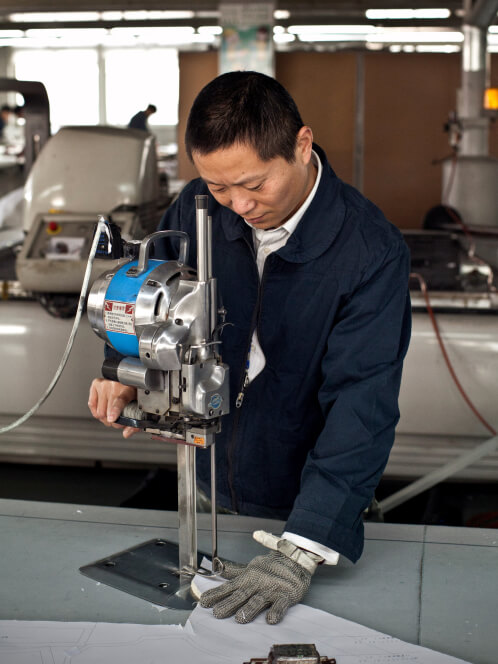
We focused on consumer-facing companies that use significant amounts of cotton (over 10,000 metric tonnes of cotton lint per year). The ranking covers companies rather than individual brands, as entire companies need to change sourcing practices across all their brands to transform cotton cultivation.

The selection of companies was based on sector indices and benchmarks, as well as lists of top companies in the fashion and garment sector and their respective markets. Special attention was given to the inclusion of companies from key emerging markets, such as India, Brazil, South Africa, and China.

The assessment covered two areas: actual uptake of certified cotton, and transparency about the use of specific standards.

The uptake section assesses the percentage of purchased cotton that is certified.

Underpinning the assessment is the expectation that companies report publicly on the uptake of certified cotton. Transparency through public reporting is vital for demonstrating sustainability leadership and enabling accountability to stakeholders. Therefore we assessed companies only on the basis of publicly available information. In most cases, the information we used came from the companies’ sustainability reports.

It is worth noting that, in some cases, low scores may reflect a true lack of action on the part of companies while, in other cases, imprecise or unclear public disclosure on efforts taken by a company may also result in a low score.

How we did the research

For instance, companies that use inaccurate wording or data in their reporting, such as “almost all cotton is from more sustainable sources”, are ranked as “unclear”. All companies in the ranking were asked for a reaction on our findings in the second half of 2022. About a quarter of them sent us a response.